China Ripe Pu-erh Super Grade
Click & Collect
Please allow 1 business day for your order to be processed
- Warehouse – 10 Jellico Drive, Scoresby VIC 3179: Monday–Friday, 10.00 am–4.30 pm
- Olinda Store – 29 Olinda-Monbulk Road, Olinda VIC 3788: 7 days, 10.00 am–5.00 pm
Retail Policy
Prices effective February 2026. Orders received before 11.00 am will generally be dispatched within 1–3 days.
We post all orders with Australia Post using E-Parcel boxes & satchels. All E-Parcel and box deliveries within Australia are traceable. Current rates are effective from February 2026. Deliveries to regional and remote areas may take longer than quoted working days. Delivery rates apply to all Online, Email and Telephone orders.
*Order total must reach $75.00 AUD after all discounts and coupon codes to be eligible for Free Freight. No free freight for International Orders or Wholesale orders.
Up to $75 orders
$9.50 inc GST
STANDARD eParcel
- No weight restrictions
- 3–5 business days delivery (WA, NT allow up to 7 business days)
- $15.95 inc GST for any order
EXPRESS eParcel
Australia Post does not guarantee overnight Express due to delays in the Australia Post network.
- No weight restrictions
- 1–3 business days delivery to postcodes in the EXPRESS Post Network
- Longer delivery to postcodes outside the EXPRESS Post Network
Wholesale Policy (No Free Freight)
- Shipping costs shall be calculated following commercial rates offered by contract couriers.
- Shipping costs shall be quoted at the time of ordering and shall appear as a freight item on the invoice.
International Policy
Tealeaves adhere to Australian Regulations, however your destination country may have different importation policies. Tealeaves will not be held liable for additional taxes, duties or surcharges that may be payable on delivery in your country. Please check with your local authorities before placing your order.
Due to possible breakage, not all Tea products are available for International Orders. Please email us at info@tealeaves.com.au if you require larger quantities of tea to be posted overseas, or if you do not see your country listed. We would be happy to quote a freight price.
International Express (No Free Freight) – we currently ship to select countries using Australia Post eParcel International Express with signature and tracking, 4–18 days delivery.
Due to the prepaid import tariff requirements imposed by U.S. customs on all shipments, Tealeaves has temporarily suspended postage services to the United States. We apologise for any inconvenience and appreciate your understanding while we review options to resume this service in the future. (Effective 26th August 2025)
International Purchases Online
Due to the high freight costs, we cannot offer returns or refunds on purchases outside of Australia. We will pack any fragile products carefully; however, products damaged in transit are not claimable. Please choose carefully!
| Destination | Up to 750g | Up to 1.7kg | Up to 3kg |
|---|---|---|---|
| New Zealand | AU$25.00 | AU$31.50 | AU$53.00 |
| China | AU$43.00 | AU$60.00 | — |
| Asia (HK SAR, Indonesia, Japan, Korea, Maldives, Malaysia, Singapore, Thailand, Taiwan, Vietnam) | AU$39.00 | AU$49.00 | AU$74.00 |
| Canada | AU$42.00 | AU$52.00 | AU$73.50 |
| South Pacific (Cook Islands, Fiji, French Polynesia, Guam, Marshall Islands, Samoa, Solomon Islands, Vanuatu) | AU$45.00 | AU$59.00 | — |
| United Kingdom, Ireland | AU$48.00 | AU$63.00 | AU$78.00 |
| Europe 1 (France, Germany, Italy, Netherlands, Norway, Spain, Sweden, Switzerland) | AU$52.00 | AU$68.00 | AU$77.00 |
| Europe 2 (Austria, Belgium, Cyprus, Denmark, Finland, Greece, Hungary, Iceland) | AU$57.00 | AU$68.00 | AU$84.00 |
| Other (UAE, Qatar, Greenland, Grenada, Liechtenstein, Luxembourg, Saudi Arabia) | AU$66.00 | AU$82.00 | — |
Packaging & Dispatch Policy
- Tea products will be carefully and firmly packaged into Australia Post traceable E‑Parcel bags or boxes. Any tins or caddies will be bubble‑wrapped and then packaged.
- Tea accessories including teapots, mugs etc. will be carefully checked and wrapped.
- Orders placed online before 11.00 am (AEST) Monday to Friday are generally dispatched the same day. Orders placed after 11.00 am (AEST) are generally dispatched the following day.
- A shipping confirmation SMS will be sent when each order leaves our premises.
Safe delivery to home or workplace
We deliver to post boxes. Australia Post satchels & boxes will usually be left at the shipping address unless otherwise stated. If your tea does not arrive within the given time, please first check with your local Post Office then contact us to trace it. To guarantee safe delivery, we recommend sending your parcel to your place of business, as parcels are typically delivered between 9 am–5 pm.
If you need further information, please get in touch with Online Sales & Enquiries at +61 3 9764 2000 Ext 2 (8.30 am–5.00 pm Monday–Friday) or email info@tealeaves.com.au.
Tealeaves Returns Policy
Please contact or return to Tealeaves within 14 days of receipt.
We want you to be delighted with your purchase, but if it does not meet your expectations, you have a change of mind, or you are not happy with your order, please contact our friendly Customer Response team here.
Proof of purchase must be provided, and the product must be in original purchase condition. Due to health regulations, we cannot accept opened tea products for return or refund; however, if a product is found to be faulty, a full refund will be made once we have received the order back into our Warehouse or our Olinda Store.
If you are unsure what tea to purchase and need assistance in choosing an item, please do not hesitate to contact us here.
Purchases made Online
- Make sure you have your Invoice No. and have read our Returns Policy.
- If you would like to return or exchange a product purchased online, don't hesitate to get in touch with our Customer Response team here.
- Coffee: we grind your coffee to order. Please choose carefully which grind you require, as a change of mind on the purchase of ground coffee is not available for exchange or refund.
Return to:
Tealeaves – Online Returns, 10 Jellico Drive, Scoresby VIC 3179
Open for in‑warehouse returns: Mon–Fri 10.00 am–4.00 pm
Purchases made at our store in Olinda
Please contact or return to Tealeaves Olinda within 14 days of purchase.
- If you would like to make an exchange or return, please ensure you bring your receipt with you and that you have read our Returns Policy. Items must be in the original purchase condition, along with any packaging that came with the product. If an exchange cannot be made, a refund or a Gift Card to re‑use in‑store can be arranged. (Store Gift Cards must be redeemed at our Olinda Store and are unavailable for Online purchases.)
- If you are unable to return the product/s to our store, please get in touch with our Customer Response team here.
- Coffee: we grind your coffee to order. Please choose carefully which grind you require, as a change of mind on the purchase of ground coffee is not available for exchange or refund.
If you have a question regarding your purchase and would like to speak with one of our staff at the Olinda store, please call +61 3 9755 2222 Option 1 for retail.
Visit our store:Tealeaves, 29 Olinda – Monbulk Road, Olinda, Victoria 3788
+61 3 9755 2222 option 1 for retail – Open 7 days 10.00 am–5.00 pm
Return Shipping
Return shipping costs will be the responsibility of the customer.
Once the product has been returned and assessed, a credit, or if you prefer, a refund, including the original shipping costs, will be made.
International Purchases Online
Due to the high costs of freight, we are unable to offer returns or refunds on purchases outside of Australia. Please choose carefully!
How long will my refund take?
- Once the items have been returned to us and checked, a refund will be made within 2 days to the original Card/PayPal account used at purchase. (A confirmation email will be sent when a refund has been made.)
- Please allow up to two business days for Banking institutions to credit your account.
Items that cannot be exchanged or refunded
- Any product purchased on SALE
- Any tea product that has been opened
- Ground coffee, change of mind
Return Enquiries
If you have any further enquiries regarding our Returns or Refunds policy, please email us or call our friendly Customer Response team.
info@tealeaves.com.au
+61 3 9764 2000 option 2 for Online Sales
1. Historical Background
Pu-erh tea traced its origins to the Tang Dynasty and thrived during the Ming and Qing Dynasties, served as a core commodity on the ancient Tea Horse Road. It was designated as an imperial tribute te during the Qing Dynasty. In ancient times, tea caravans transported tea leaves over long distances and the leaves slowly mellowed in the mountain wildernaess where significant diurnal temperature variations and high humidity prevailed. This process gave rise to Pu'er tea's distinctive characteristic of improving with age.
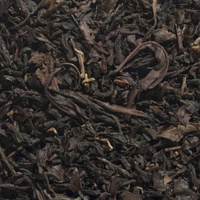
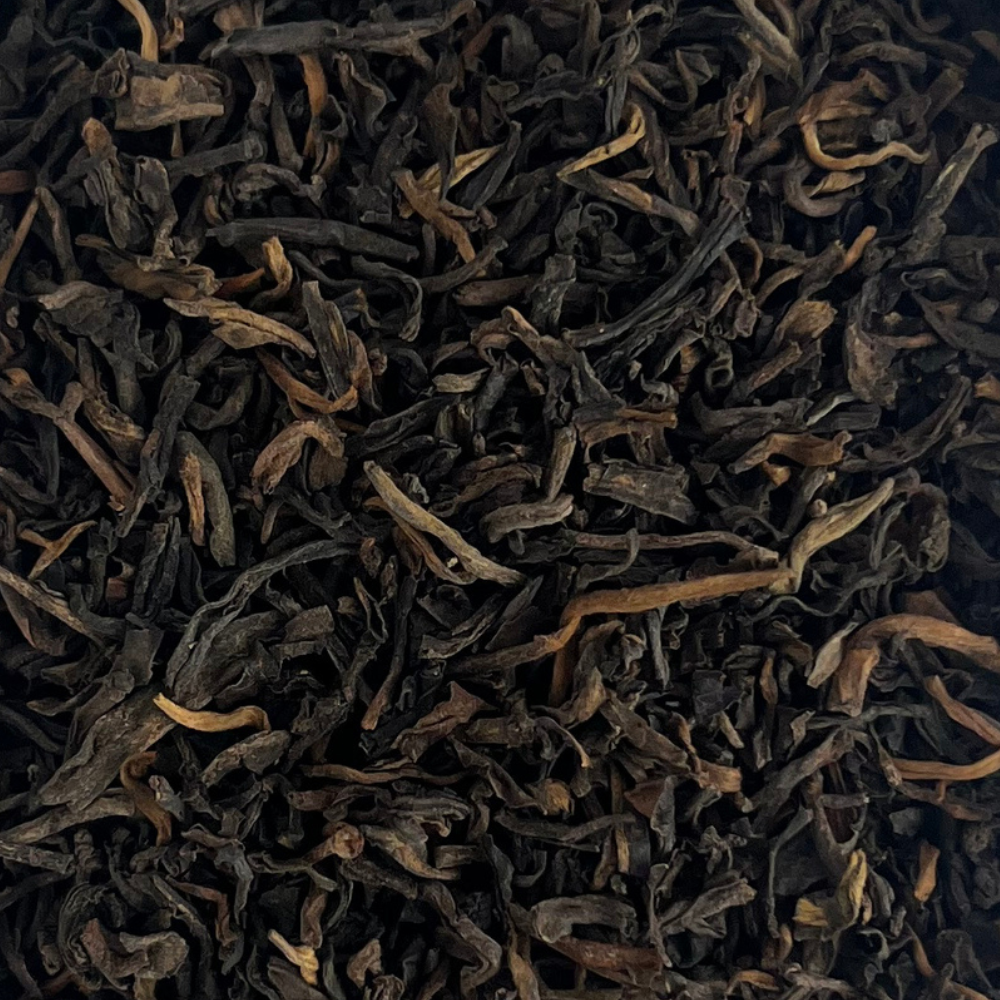
This Super Pu-erh Tea was mad from high-mountain first flush spring tea leaves, combined with a modern light-wet-piling process to recreate the wild mountain charm of ancient Tea Horse Road teas with less astringency. It offered a sweet, soft and smooth taste, combining the freshness of new tea with the mellow mouthfeel of aged tea.
2 Origin & Tea Garden Information
Core Origin: Primitive ecological tea region of Xishuanghanna, Yunnan
Garden Altitude: 1,600 -1800 meters above sea level. The gardens are shrouded in mist with large diurnal temperature differences, free from industrial pollution. The tea leaves are rich in internal compounds, with high sweetness and low bitterness/astringency.
3. Plucking Standards
Plucking Season: First-flush spring harvest, March-April annually
Plucking Method: 100% hand-plucked, strictly following the "one bud, two leaves" standard. Leaves are carefully selected with no mechanical damage, broken leaves or foreign body containment.
Plucking Year: Fresh leaves from the current season, processed immediately after harvest to preserve the authentic spring tea flavor.
4. Production Process
After plucking, the fresh leaves are naturally withered for 6-8 hours to soften the leaf tissue and enhance aroma. The sweetness of tea liquor is locked from the traditional hand-pan -fired process. Manual rolling shapes the tight strips and improves infusion longevity. Natural sun-drying at low temperature preserves the high - mountain character. The leaves then undergo a 40-day light wet-piling process with controlled temperature to harmonize the tea nature and soften the liquor. Finally, the tea is manually graded, selected, and stored in a dry warehouse at constant temperature to ensure purity and clean aroma, with further natural aging.
Recommended Brewing Guide
Tea to water ratio: 5g per 100ml (standard ratio 1:20), ideal for gaiwan brewing
Water Temperature: 95-100C boiling water
Brewing Vessels: White porcelain gawan, purple clay teapot, or glass fair cup
Brewing Steps: Warm and rinse vessels - Quick 3-second rinse (awakening the tea)- First infusion: 8 seconds; 2nd -3rd infusions: 10-15 seconds: subsequent infusions: add 5-10 seconds per steep. The tea can be infused 8-10 times.
Flavour: Bright, clear liquor with long-lasting sweet aftertaste and distinct wild mountain aroma.
6 Standardized Storage Guidlines
Sealing: Semi-sealed, breathable storage (purple clay jar or breathable tea bag) to allow gentle aging
Light: Keep away from light at all times: no direct sunlight.
Temperature: Constant 20-25C: avoid high heat, freezing, or sudden temperature changes
Environment: Dry, well -ventilated space with 50-65% humidity. Keep way from cooking smoke, artificial fragrances, and strong odors and ensure moisture proof, dust proof and odor proof.
(1151)
| SKU | 1151 |
| Brewing Time: 8 Seconds |
| Brewing Temp °C: 95-100 |
| Brewing Quantity: 1 teaspoon |
Be The First To Review This Product!
Help other Tea Leaves AUST Pty Ltd users shop smarter by writing reviews for products you have purchased.